1980 · Commodore Business Machines · US · computer
Commodore VIC-20
Endorsed by William Shatner as "The Friendly Computer", the VIC-20 was the first computer in history to sell one million units.
A curiosity Trivial to run Needs a keyboard ▶ Watch on YouTube ↗
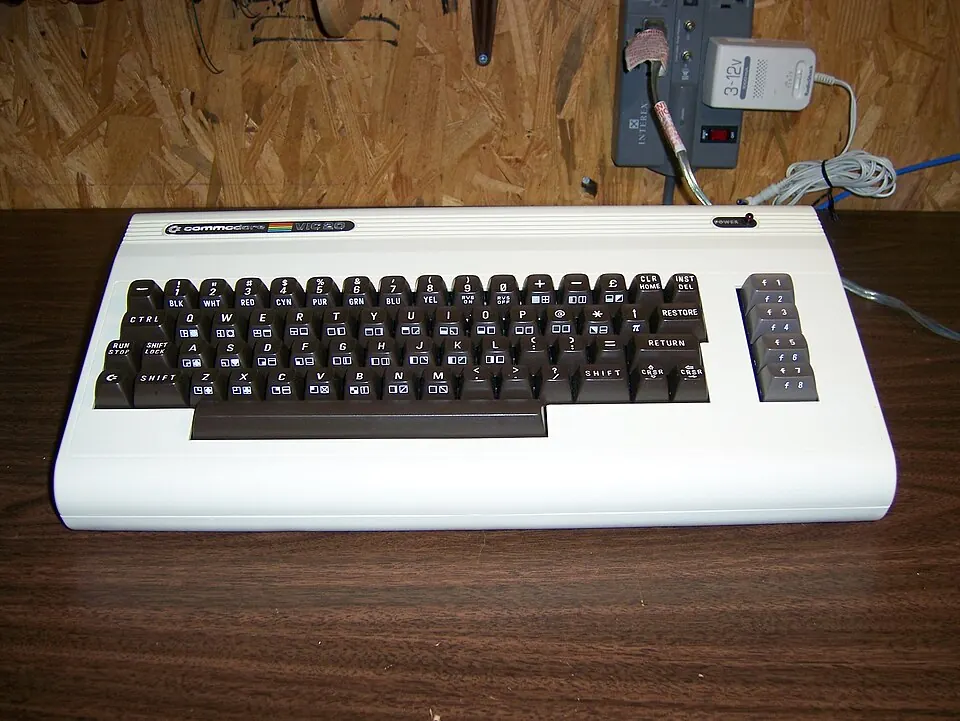
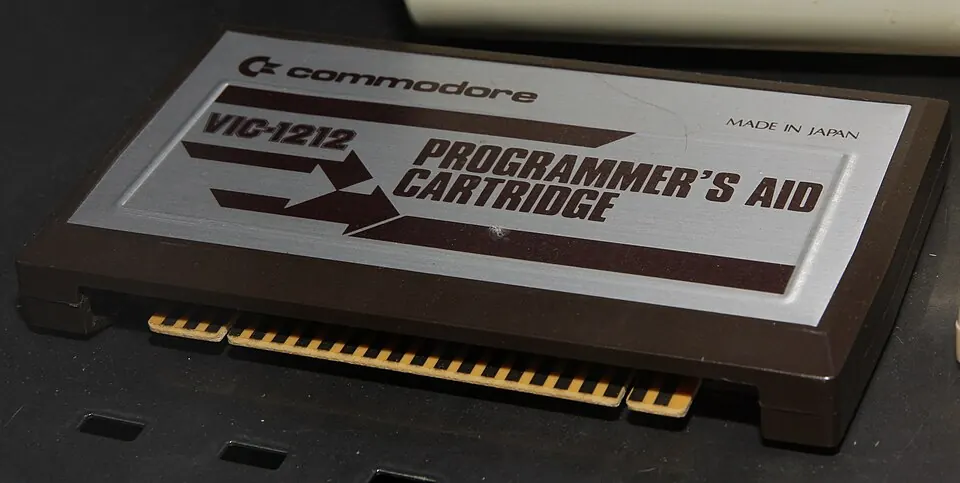
Endorsed by William Shatner as "The Friendly Computer", the VIC-20 was an early computer in history to sell one million units. It pioneered selling home computers in department stores like Kmart instead of specialist hobbyist stores.
Jack Tramiel’s philosophy: "We make computers for the masses, not the classes." The VIC-20 proved that personal computers could be mass-consumer entertainment devices.
Under the hood
- CPU
- MOS 6502 @ 1.02 MHz (5 KB RAM built-in, 3.5 KB free for BASIC)
- Sound chip
- VIC (MOS 6560) 3 square-wave channels + 1 white noise channel
- Graphics
- 22 columns × 23 rows text, 176 × 184 graphics, 16 colors
- Media
- Datasette Cassette Tape & Cartridges
What it cost
only about 9% of a month’s pay in 1983 · about $312 today
| US launch list price ($299.95) |
$299.95 (1981)
about a quarter of a month’s pay · about $1,035 in today's money |
|---|---|
| Sub-$100 department store price | $99 (1983) |
| Units sold | 2,500,000 2.5 million units sold (the first computer to sell 1M units). |
Why it mattered
Jack Tramiel’s philosophy: "We make computers for the masses, not the classes." The VIC-20 proved that personal computers could be mass-consumer entertainment devices.
Emulating it today
| Emulators | VICE (xvic) |
|---|---|
| Setup effort | Trivial to run (1 on this site's scale) |
| Controls | The original software assumes a keyboard. A desktop setup feels natural; on a handheld, map common keys and keep an on-screen keyboard available. |
| Runs on a handheld | Yes |
Uses VICE (xvic) core in RetroArch. Memory expansions (3K, 8K, 16K, 24K) sometimes need manual configuration per tape/disk image. The emulator names above are starting points, not a promise that every title or accessory behaves identically. Computer platforms usually add model selection, disk handling and keyboard setup even when CPU emulation itself is mature.
Firmware
This system needs no firmware file. Install an emulator, open a game, and it runs.
How many files you need: none to go and find. No separate firmware file is needed for an ordinary setup.
Firmware details checked 2026-08. Emulator requirements change — see Libretro documentation for the current list.
Where the software is
TOSEC catalogues computer disks and tapes broadly, including many revisions. It is useful for preservation, while a smaller curated selection is usually easier to play.
Copyright: Commercial software remains copyrighted unless its owner explicitly released or relicensed it. Homebrew, public-domain programs and current reissues should be treated separately from abandoned commercial titles.
This site names preservation projects and explains what they are. It does not link to ROM downloads.
Where to start
- Jelly Monsters Maze Action
Arguably the best uncredited Pac-Man clone of its era.
- Radar Rat Race Maze Chase
Guide mice through cheese mazes dodging evil rats.
- Gorf Multi-stage Shooter
Incredible conversion of the Bally Midway arcade game.
- Omega Race Vector Shooter
Smooth vector space combat inside a walled arena.
- Avenger Fixed Shooter
Tight Space Invaders conversion for 5 KB RAM.
The verdict
Charming 5 KB RAM microcomputer. Fun for seeing how developers squeezed arcade games (Jelly Monsters, Radar Rat Race) into 3.5 KB of user memory, but superseded by the C64.
The strongest software can be rewarding, but original controls and setup assumptions may matter more than screenshots suggest.
- Worth it if
- Players curious about commodore 8-bit home computers and willing to learn how the original machine worked.
- Not for
- Anyone who wants a large, instantly accessible library and no model, firmware or control decisions.
Scored 2/5 for fun today and 3/5 for historical importance. Those two scores decide the label at the top — a machine can matter enormously and still be no fun.
Read more & watch
This page is 75% complete against the facts we try to record for every system. Gaps are shown as gaps.